
Why AI Art is the Future of Creativity in the Modern Art World
The art world is undergoing a profound transformation. While auction houses like Sotheby’s and Christie’s are selling AI-generated artworks for hundreds of thousands, even over a million dollars, many people remain skeptical or even hostile toward AI art.
This tension raises an important question: why is AI art a genuine and valuable form of creativity? Understanding this can help us appreciate how AI art is shaping the future of artistic expression, and why AI art can take a proud place among that of innovators like Albrecht Dürer, Leonardo da Vinci and Andy Warhol.

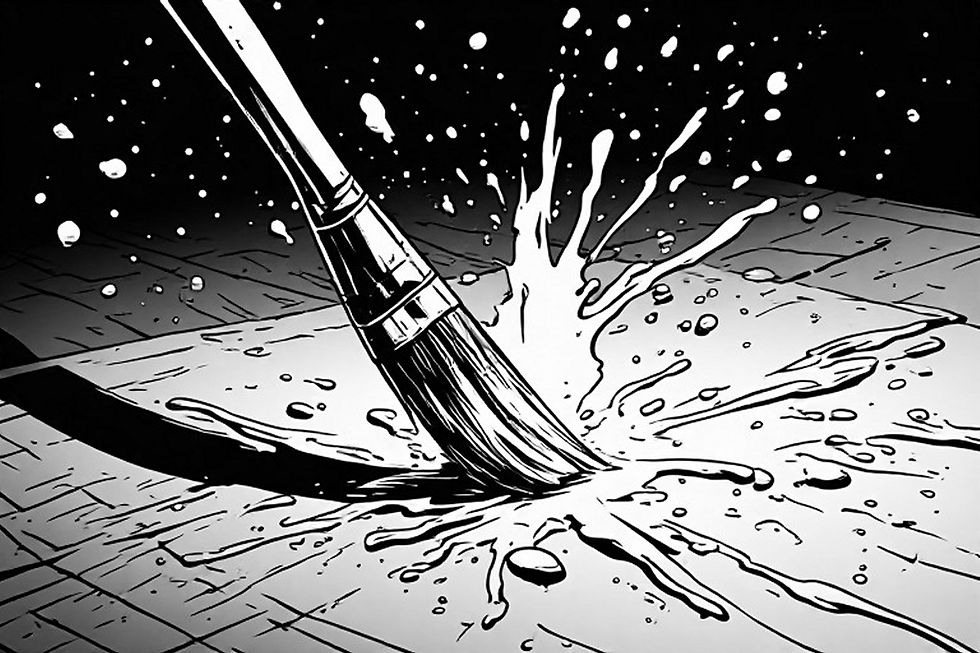
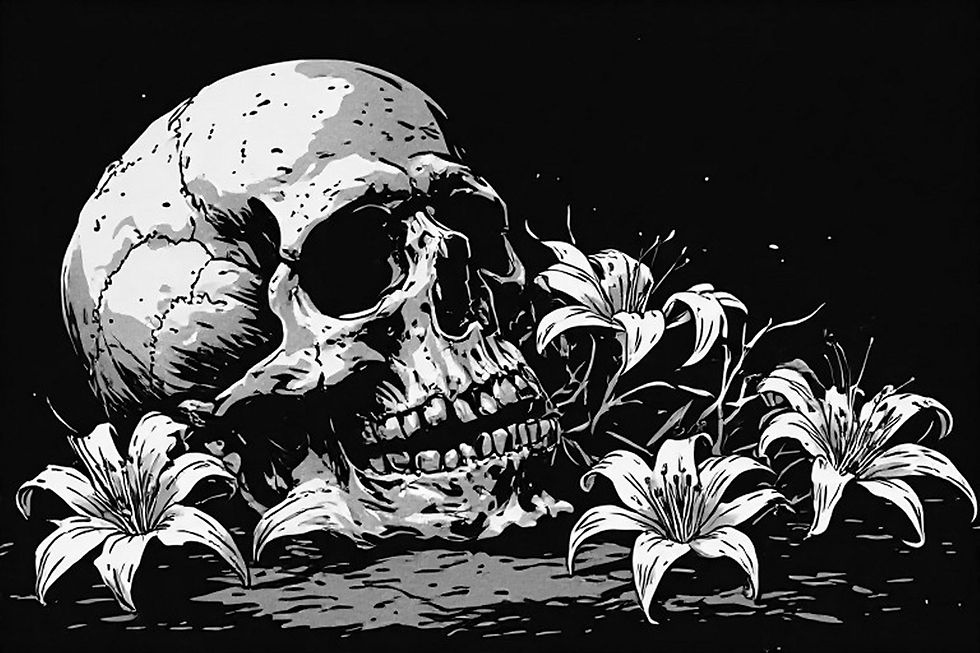
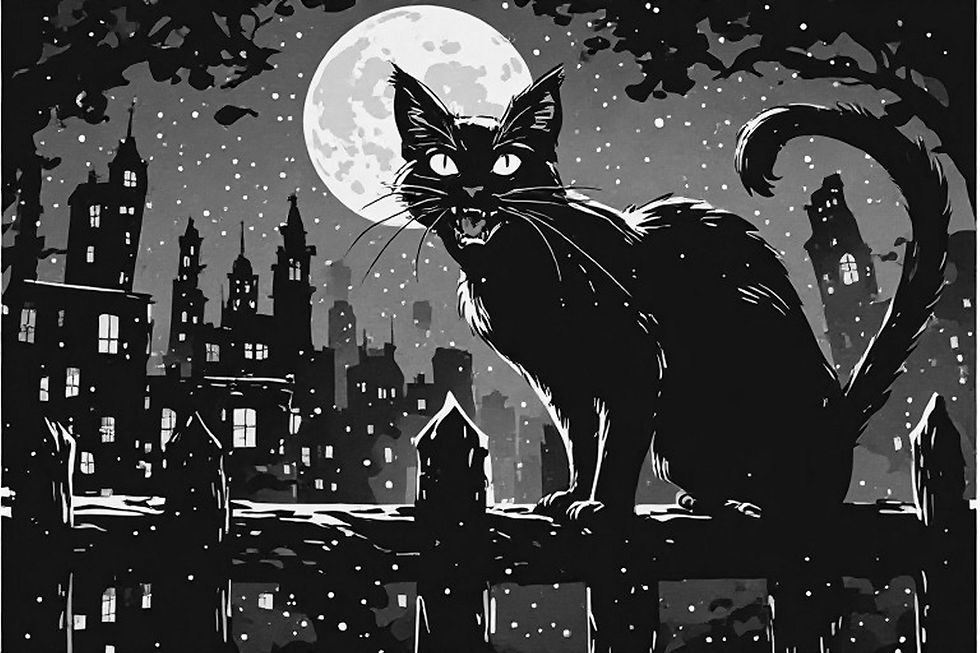
About the art in this article: All pics are done in BW retro 50s comic book style and are AI assisted. Because significant human input was used to create them, they are copyright Sylvia Kay Rose and cannot be used without explicit permission of the copyright holder.
Artists' Note: Black and white 50s style graphic art, unique and expressive, is one of my favourite artistic genres. These works were created by me with significant human input, and intended as illustrations for Strange Vibes Anthology Volume 2.
I've been a graphic artist for many years. For me, AI is just another new tool, and a handy one, too. Due to disabilities it's much easier for me to work on a computer than with traditional brush and paint.
Trust me, AI is not the "instant magic" touted by those who've never used it. The image generally needs to be patiently worked until desired effects are achieved. Photographs and graphic art often have less human interaction than AI assisted art.
Nonetheless, change is always met with resistance, and we're caught in the midst of it. Due to utter confusion among different publishing platforms regarding the use of AI and AI assisted images, with some welcoming them, and others banning authors who use them, along with changing rules, witch-hunts and downright hypocritical policies, it's necessary to err on the side of caution and remove the pics from the publication, until the the time is right for broader acceptance of a medium already embraced and valued by the art world.
And now the time is right.
AI Art as a New Creative Medium
AI art will not replace human artists. It represents a new tool artists can use to explore ideas and create works previously impossible. Just as the printing press, camera obscura, photography and digital art expanded the boundaries of creativity in the past, AI introduces fresh possibilities.
Collaboration between human and machine: AI algorithms generate images based on data and patterns, but human artists guide the process by selecting inputs, refining outputs, and adding personal touches. This partnership blends human intuition with computational power.
Exploration of complexity: AI can analyze vast amounts of visual data and create intricate patterns or styles that would be difficult for humans to produce manually.
New forms of expression: AI art can combine styles, themes, and concepts in innovative ways, pushing the limits of traditional art forms.
Customizable Art: with advancements in technology allowing customization, artists can better meet the needs of art buyers.
Legal Recognition and Market Validation
The acceptance of AI art is growing not only among artists but also in legal and commercial arenas. Countries like China and the UK now allow copyright protection for AI-generated art, recognizing the creative input involved. Most other countries allow copyright of AI-assisted art, acknowledging the human role in the process.
This legal recognition supports the legitimacy of AI art and encourages artists to experiment without fear of losing rights to their work. It also reassures collectors and investors, contributing to the booming market for AI art.

Why the Public Often Reacts Negatively
Despite these advances, many people react with suspicion or hostility toward AI art. This response comes from several sources:
Fear of technology replacing human creativity: Some worry AI will make artists obsolete or devalue traditional skills.
Misunderstanding of AI’s role: People often see AI art as “fake” or “not real art” because a machine is involved.
Concerns about originality: Since AI learns from existing artworks, critics question whether AI art is truly original or just derivative.
These concerns are understandable but overlook the fact that all art builds on previous work and that AI is a tool shaped by human creativity.
How AI Art Expands Creative Possibilities
AI art challenges traditional ideas about creativity and originality. It invites artists to think differently about their process and outcomes.
Speed and iteration: AI can generate multiple versions of an artwork quickly, allowing artists to experiment more freely.
Access to new styles: Artists can use AI to blend styles from different cultures or historical periods, creating unique hybrids.
Interactive art: AI enables dynamic artworks that change based on viewer interaction or environmental data.
These features open new doors for artistic innovation and audience engagement.
Examples of AI Art in Practice
Several artists and projects illustrate the potential of AI art:
Refik Anadol uses AI to create immersive installations that visualize data in stunning ways.
Mario Klingemann explores machine learning to generate portraits and abstract art that challenge perceptions.
The Obvious collective created Edmond de Belamy, the first AI artwork sold at a major auction house, in 2018. In 2024, Sotheby's sold an AI portrait by an AI robot for over a million dollars.
These examples show how AI art can be both conceptually rich and commercially successful.
Embracing AI Art as Part of Artistic Evolution
Art has always evolved with new tools and ideas. AI art is the latest chapter in this ongoing story. Rather than fearing AI, embracing it allows artists and audiences to discover new forms of beauty and meaning.
AI art encourages collaboration between technology and human creativity.
It expands the definition of what art can be.
It offers fresh ways to connect with viewers and collectors.
AI art, rather than being a trend or novelty, represents a meaningful expansion of creative expression, supported by legal recognition and market success. While public skepticism remains, understanding AI art’s role as a collaborative, innovative medium helps us appreciate its place in the modern art world. Art is by nature subversive.
As artists continue to explore AI’s potential, creativity reaches new heights, reminding us all that true art is about breaking limitations. Albrecht Dürer did it with printmaking; Da Vinci with the camera obscura; and Andy Warhol, with a simple soup can.
And that is why AI is art.
And finally,
Does AI art negatively affect the environment more than regular, accepted use of AI?
No, AI art generation does not inherently have a greater environmental impact than general AI use. However, specific image-creation tasks demand intensive computing power, consuming significantly more energy per individual prompt compared to basic text queries.
Energy and Computation
Text vs. Images: Creating a single AI image or video using diffusion models involves more data processing and computations than generating a short text prompt with a chatbot.
Shared Infrastructure: Both AI art and regular AI (such as chatbots or search tools) depend on the same energy-intensive data centers, specialized GPUs, and hardware manufacturing pipelines.
Scale of Impact: Regular AI tools are used billions of times daily for routine tasks, meaning their cumulative global energy and water footprint surpasses the specific subset of AI art generation.

Handy Links


Comments